The Expanding Role of Marketing in the Patient Journey
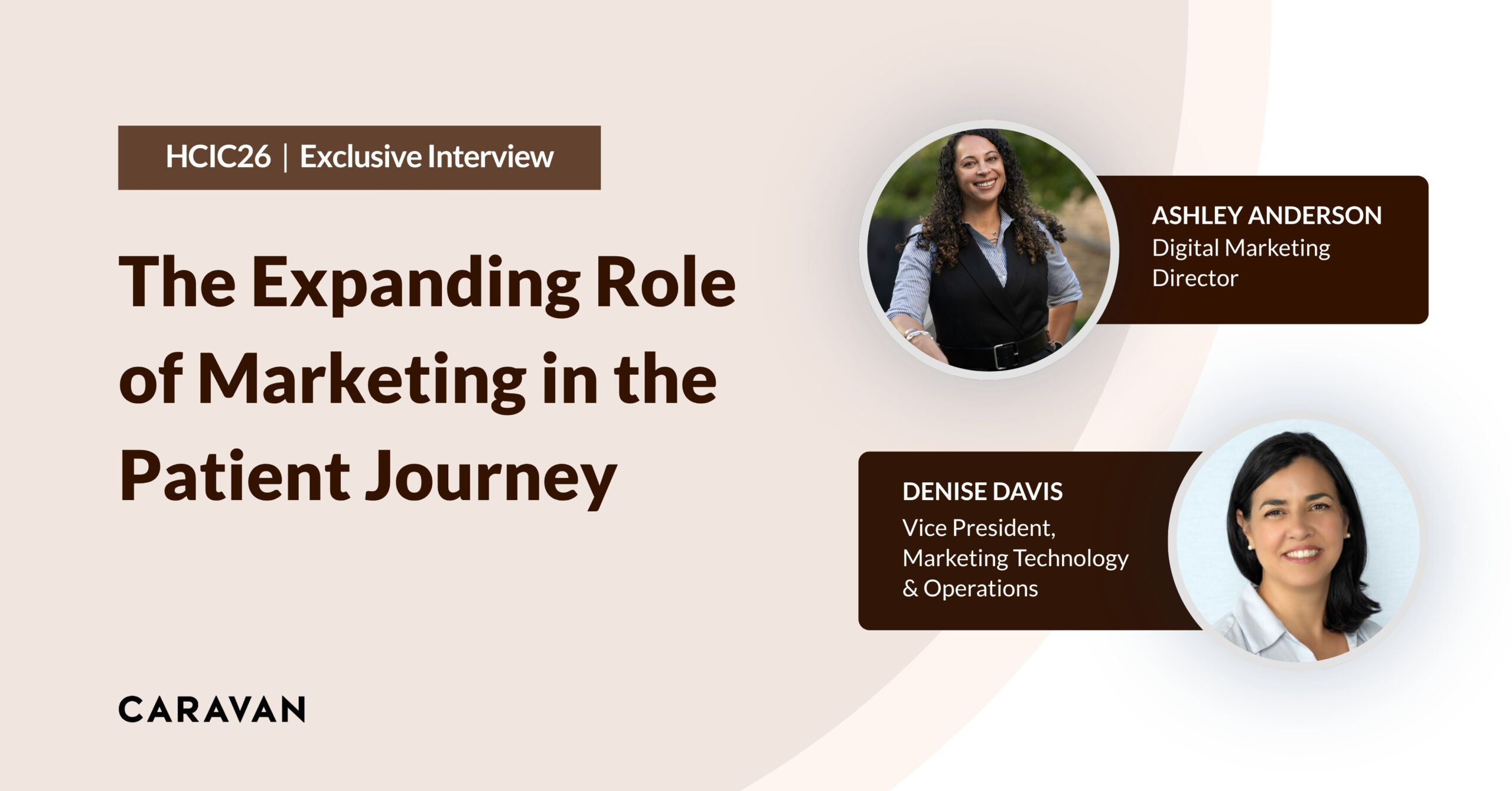
Healthcare marketing is no longer just about attracting new patients. As digital platforms become a larger part of healthcare, marketing teams are finding new ways to help people access health information and stay connected with their providers.
At the 2026 Healthcare Internet Conference (HCIC), Ashley Anderson, MPH, Digital Marketing Director at Adventist Health, and Denise Davis, Vice President of Marketing Technology & Operations at Emory Healthcare, shared their perspectives on how healthcare organizations are making better use of marketing technology, strengthening the operations behind it, and improving digital engagement throughout the patient journey.
Moving Beyond Patient Acquisition
“There was a time in my career when we just had to worry about getting people to the door,” Davis said. “Once they were through the door, we did not have to deal with them.”
Today, marketing teams have an opportunity to play a larger role in the healthcare experience. Davis frames that larger role around the consumer lifecycle. “I believe healthcare marketing has a role in what I call the consumer lifecycle,” she said. “That is not uncommon outside of healthcare, but it is not recognized as necessarily a marketing role.”
Communicating with patients throughout their care, Davis explained, takes a level of mass communication and content production experience that marketing and communications teams already have, but that internal operations teams may not realize marketing can provide. As a result, marketers often need to advocate for that role and bring forward solutions that other departments can easily understand and support.
Seeing the Journey from Further Out
Part of what marketing brings to the table, according to Davis, is a wider view of when the patient journey actually begins. For many internal teams, the journey starts when someone books an appointment and walks through the door.
“We see the journey way further out, back when they are searching, when they are trying to get information,” Davis said. “I find it is really important for us to share that perspective to make sure we are taking the whole of the patient journey into account.”
Anderson sees data as the key to understanding that digital patient journey. People often interact with healthcare organizations through websites, digital advertisements, and provider search tools before scheduling an appointment. When these platforms operate separately, it can be difficult to understand how those interactions connect. Anderson pointed to data silos as one of the biggest obstacles, along with the integrations organizations need “to fully understand and see the full picture of the digital experience.”
Bringing that data together is what allows teams to see where patients are engaging, where they are dropping off, and which improvements will have the greatest impact. Anderson also sees an opportunity to layer AI on top of analytics to turn that data into insights faster. “It is a really big opportunity for us to use AI with the data to make better changes for our patients,” she said. Limited resources, from people to platforms to budget, and the rapid pace of change in AI add to the challenge of getting there.
Improving how these systems work together can help organizations create a more consistent digital experience.
Building the Operational Foundation
Technology alone does not create a better experience. Davis emphasized that the teams behind it need clear, repeatable ways of working, an insight she said resonated with many attendees at her session.
“Whether or not they have formal PM roles, the leaders need to reinforce repeatable processes and define minimum viable product in terms of quality,” Davis said. “Set expectations, define the roles, and be fluid.”
At Emory Healthcare, her director of operations and process improvement built a team of project managers and defined what success looks like in that role, so deliverables stay consistent no matter who is leading the work. “We knew what to expect regardless of which PM was on the project,” Davis said. “It should all look the same.” That baseline supports professional development for the project managers while giving the teams who work alongside them a predictable experience.
Davis added that documented processes cannot stay static. As organizations grow, adopt new technology, and take on new demands, existing processes and skill sets will be tested, so documentation needs regular review. The goal is not to throw everything out, but to teach teams to be agile and shift processes when needed.
The same principle applies to small teams. Whether an organization has a full project management team or a department of one, defining how work gets done helps teams work better with stakeholders, set boundaries around what they can and cannot take on, and hand off work when the organization changes, including during acquisitions.
“The minute you get that magical extra resource, you are able to hand off more easily,” Davis said. “You have to take a minute to do the brain dump and get things down on paper, because you will not stay a team of one forever.”
Making Better Use of Marketing Technology
Both Anderson and Davis acknowledged the challenges of managing multiple digital platforms across healthcare organizations.
Davis noted that departments sometimes invest in tools with overlapping capabilities, making it important to evaluate whether existing technology is being used effectively.
“I always think of software as another employee,” Davis said. “You are delegating work to it, making sure the work it is supposed to be doing is getting done, and providing demonstrable return to the company.”
Anderson emphasized the importance of working with IT, legal, risk, and compliance teams when introducing new technology. She also highlighted the need to balance useful website analytics with protecting personal health information.
Anderson also explored the potential of AI in healthcare marketing, emphasizing a gradual approach she describes as “go slow to go fast.” Testing new tools on a smaller scale gives teams time to understand their value before expanding their use.
AI: Go Slow to Go Fast
Anderson also explored the potential of AI in healthcare marketing, emphasizing a gradual approach she describes as “go slow to go fast.” That means first stepping back to understand what a good patient experience requires, then layering AI on top to support it, whether through search, data, or turning analytics into insights faster. Patients are already turning to AI tools to find medical information and doctors, which makes the question more pressing.
At Adventist Health, her team is piloting AI to help create provider bios for its website and third-party listings. Testing new tools on a smaller scale gives teams time to understand their value before expanding their use, and builds the case with leadership. “That proof of concept is really what is going to take whatever you are trying to do to the next level,” Anderson said.
Davis sees AI as a way to extend what marketing teams can accomplish rather than replace the people on them. With healthcare economics shifting across the industry, she said marketers will need to stay scrappy, and AI can increase efficiency and help teams take on work they never had time for before.
Supporting Engagement Beyond the First Appointment
Healthcare engagement does not end once someone schedules an appointment. Organizations have an opportunity to maintain that connection by providing relevant health and wellness information throughout a person’s care.
Digital content can support this effort by making educational resources more accessible and giving people opportunities to stay informed between appointments.
However, creating a connected experience requires more than introducing new technology. Healthcare organizations also need to consider how their platforms work together and whether the information they share is easy to access.
While Anderson and Davis approached these challenges from different perspectives, both emphasized the importance of making better use of existing technology. Their insights show how healthcare marketing can extend beyond individual campaigns to support ongoing communication and education throughout a person’s care.
About Ashley Anderson
Ashley Anderson is the Digital Marketing Director at Adventist Health, where she focuses on digital marketing strategy and improving the online patient experience.
About Denise Davis
Denise Davis is the Vice President of Marketing Technology & Operations at Emory Healthcare, where she focuses on marketing operations and improving the use of marketing technology.