Beyond AI: What Patients Take Home
The World Health Organization projects a global shortage of approximately 11 million healthcare workers by 2030, highlighting the growing pressure on healthcare systems to meet patient needs. As organizations turn to artificial intelligence and digital health tools to improve efficiency and expand access, ensuring patients receive clear, trustworthy information remains just as important.
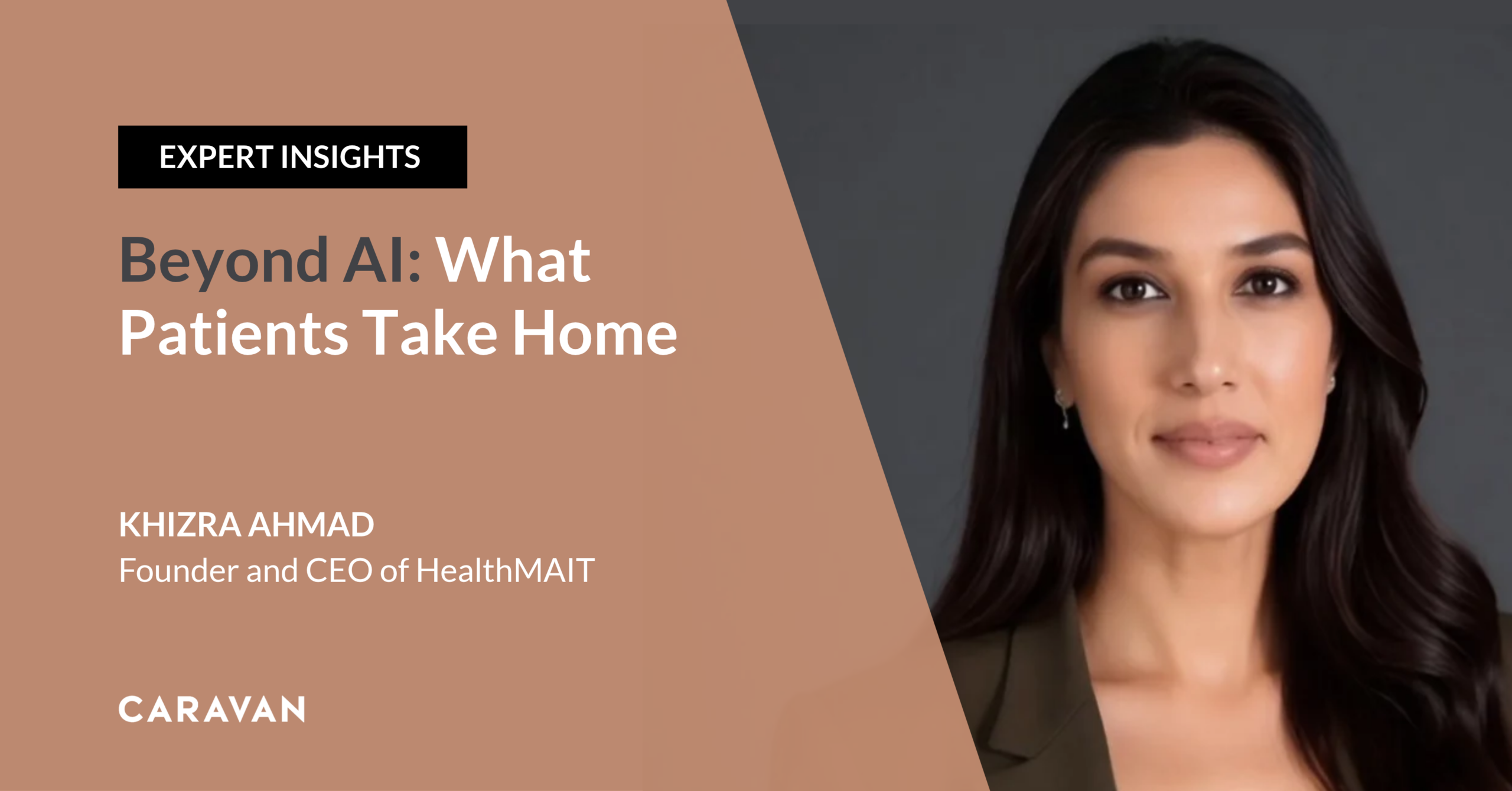
In this interview, Khizra Ahmad, Founder and CEO of HealthMAIT, shares her perspective on improving health literacy, building trust across diverse communities, and preparing healthcare professionals to use AI responsibly. Drawing on more than 20 years of experience in strategic communications and healthcare leadership, she explores how organizations can use technology to support patients while preserving the human connection at the heart of quality care.
1. You’ve spent your career working across education, clinical settings, and healthcare leadership, often communicating complex ideas to very different audiences. What have those experiences taught you about how people best understand and retain health information?
A patient can nod, say thank you and walk out of a consultation carrying only half of what they were told. I’ve come to believe that the most important health information is often the part that never makes it past the door.
My background in education first showed me why. People don’t learn by being told more; they learn by connecting new ideas to what they already know in small pieces they can hold onto. Health information is no different, except the stakes are far higher.
In clinical settings that challenge is magnified by fear, pain and overload. In my Reflection published in the Journal of Cancer Education, which introduces the algorithmic consultation and TRACE, a simulation framework for training clinicians to communicate AI-generated information to patients, I highlight that only around a third of patients accurately understand the risk figures they receive after an oncology consultation. In healthcare leadership training through HealthMAIT I’ve seen the same pattern; clarity has to come before action.
Whatever the audience, the lesson still holds. People understand health information when it speaks plainly to their own situation and answers two questions: what does this mean for me and what do I do next? They retain it when it is limited to a few key messages, reinforced with something written or visual to take home and checked by asking them to explain it back in their own words. Health information only works when it is remembered.
2. You’ve worked with healthcare professionals across various regions and cultures. How has that global perspective shaped your understanding of the role culture and language play in healthcare communication and building trust?
A word that reassures in one room can alarm in another. Training healthcare professionals internationally, building HealthMAIT’s collaborations with healthcare partners across Europe, Middle East, North Africa and South Asia, working with underserved communities through the APPS UK Foundation’s Medical Aid Mission and speaking with global healthcare leaders on Global Pulse in 60 Seconds have all taught me the same thing: in healthcare how something is said can matter as much as what is said.
Culture shapes almost everything about how people experience health; how they describe symptoms, whether illness is discussed openly or privately, who they turn to for advice and how decisions are made. In many communities those decisions are shared with family and elders rather than made alone. Healthcare communication that ignores this will struggle however accurate it is.
Language plays an equally powerful role. Medical terminology can create distance even between people who speak the same language and translation alone does not carry meaning, tone or reassurance. Real understanding comes from plain language, culturally familiar examples and trusted messengers who understand the community they serve.
All of this comes back to trust. People trust healthcare professionals who take the time to understand their context rather than assume it. When people feel respected in their own language and culture they are far more likely to trust the advice they receive and to act on it.
3. Through your involvement with the APPS UK Foundation and global health initiatives, you’ve seen the challenges underserved communities face in accessing quality healthcare. Beyond expanding access to medical services, what do you believe are the most important factors in creating sustainable improvements in health outcomes for these communities?
Where you live can determine whether you live. I’ve stood in rural communities across South Asia where basic diagnostics can mean traveling for hours, sometimes days and where treatable conditions escalate simply because care arrives too late.
Mobile medical clinics, eye and limb surgeries, dialysis services and vaccination drives change lives. But access alone does not sustain change. In my recent article The Human Side of AI-Enabled MedTech, I explore what it takes for care and technology to reach the people who need them most. In my experience four factors make the difference.
First, involving communities from the start so services are designed with them rather than for them and reflect their real needs and circumstances.
Second, health education. When people understand their health, recognise warning signs and know how to use the care available they can act earlier and advocate for themselves and their families.
Third, local capability. Training and equipping local health workers means knowledge and skills stay in the community long after a project ends.
Fourth, technology that is fit for its setting. A portable ultrasound or point-of-care test in the right hands can transform a clinical decision within minutes. But AI trained on unrepresentative data can overlook the very patients already left behind.
Sustainable improvement is not about building smarter machines. It is about building fairer systems that communities trust and can sustain themselves.
4. Through your work at HealthMAIT, you’ve focused on preparing healthcare professionals to navigate the growing role of AI in medicine. As these technologies become more integrated into healthcare, how can organizations ensure they enhance clinical decision making and efficiency without compromising the human connection that patients value?
The algorithm is already speaking in healthcare. Prognostic tools generate risk scores, decision support systems suggest diagnoses and AI is increasingly present in conversations between clinicians and patients. The question is no longer whether AI will shape care but whether the people using it are ready.
At HealthMAIT we design training specifically for clinical and non-clinical healthcare professionals because AI in healthcare cannot be learned from generic technology courses. Used well AI can strengthen clinical decision-making through better diagnostics, decision support and monitoring, and improve efficiency by reducing administrative burden. That time should go back to patients.
My experience as a scuba diver has taught me something that is equally relevant to AI adoption; confidence comes from preparation, understanding your limits and knowing when to rely on your judgement. When deep diving you need to understand the environment, recognise the risks and know when not to push further. Healthcare professionals need the same awareness when working with AI. They must understand its limitations, recognise risks such as automation bias, hallucinations and algorithmic bias, and know when human judgement and oversight must take precedence.
Organisations need governance, risk management and continuous monitoring. As a PECB Certified ISO/IEC 42001 Lead Implementer I’ve seen how these structures build confidence that AI is safe and accountable.
Protecting human connection also means preparing clinicians for what I describe in my Journal of Cancer Education research as the algorithmic consultation: conversations where an AI output sits between clinician and patient. Clinicians must be able to explain AI-informed information clearly, answer questions with compassion and keep the patient at the centre of the decision.
AI should strengthen the relationship between clinician and patient, never stand in its place.
5. Looking ahead, as healthcare organizations face growing demands to improve patient outcomes and engagement, what do you believe needs to change in how they communicate with, support, and build lasting relationships with the communities they serve?
Healthcare has long treated communities in episodes; an appointment, a diagnosis, a discharge then silence until the next visit. Hospitals, clinics and health systems are now expected to deliver better outcomes and deeper patient engagement, and that model can’t do it. The biggest change needed is a move from one-off clinical encounters to lasting relationships with patients and their communities.
That move starts with communication. Healthcare providers often judge success by whether information was delivered, yet many patients still leave consultations unsure of what they have been told. In cancer care for example, patients can walk away without clearly understanding their risk of recurrence, one of the most important things they will ever be told. Communicating well means clinicians using plain language, checking that patients have understood and listening as much as informing.
Good communication then has to be backed by support that carries on after the consultation. Virtual care and remote monitoring now make it possible for patients to stay connected with their care teams between visits. Through HealthMAIT’s work with telehealth and virtual care partners I see how much this can strengthen ongoing care, especially for people with long-term conditions. But every digital pathway needs a human one alongside it so that no patient is left behind for lack of a device, a connection or the confidence to use them.
That human pathway depends on people and lasting relationships are ultimately built by healthcare professionals. Yet the world faces a projected shortfall of 11 million health workers by 2030 and when care teams are stretched, time to listen is often the first thing lost. AI cannot replace those professionals but used well it can ease administrative pressure and give clinicians more time with patients. That depends on training, which is why HealthMAIT focuses on equipping healthcare professionals to use AI responsibly so that technology strengthens their relationships with patients rather than adding to the strain.
Moving from episodes to relationships will not happen overnight. But hospitals and health systems that lead will be those that treat patient engagement not as a campaign but as a relationship they invest in every day.
Healthcare organizations have an opportunity to use AI and digital health tools to make care more accessible while strengthening the relationships patients rely on. As Ahmad emphasizes, technology alone cannot address the challenges facing healthcare. Patients also need information they can understand, professionals who listen to their concerns, and support that continues beyond individual appointments.
By investing in clear communication, culturally relevant education, and responsible technology, healthcare organizations can help patients feel more informed and involved in their care. The goal is not simply to introduce more advanced tools, but to make healthcare more responsive to the people it serves.
About Khizra Ahmad
Khizra Ahmad is the Founder and CEO of HealthMAIT – Health & Medical AI Training Ltd, where she helps healthcare professionals and organizations navigate the growing role of artificial intelligence in healthcare. With more than 20 years of experience in strategic communications, she holds an MSc from the University of Oxford and is a PECB Certified ISO/IEC 42001 Lead Implementer. She is also a Peer Reviewer for the Journal of Cancer Education, where she has published research on communicating AI-generated information to patients. Beyond her work at HealthMAIT, Ahmad serves as an Executive Board Member and Director of Strategy and Leadership at the APPS UK Foundation and hosts Global Pulse in 60 Seconds, a podcast featuring leaders across healthcare, pharmaceuticals, and MedTech.
À propos de CARAVAN
CARAVAN Wellness is the #1 global leader in expert content solutions for health, wellness, workplace, financial care, and education. CARAVAN impacts millions of people by helping healthcare organizations, health plans, employers, and digital platforms educate, engage, and empower people with trusted expert content. At CARAVAN, we envision a world where everyone can access trusted education and resources, regardless of their age, income, or location. Learn more at caravanwellness.com