From Patient Portals to Patient Empowerment
Among patients who had not adopted a patient portal, 64% said they preferred communicating with their healthcare provider in person. As healthcare becomes increasingly digital, creating tools patients can access is only part of the challenge. Those tools also need to be intuitive and designed to meet specific patient needs.
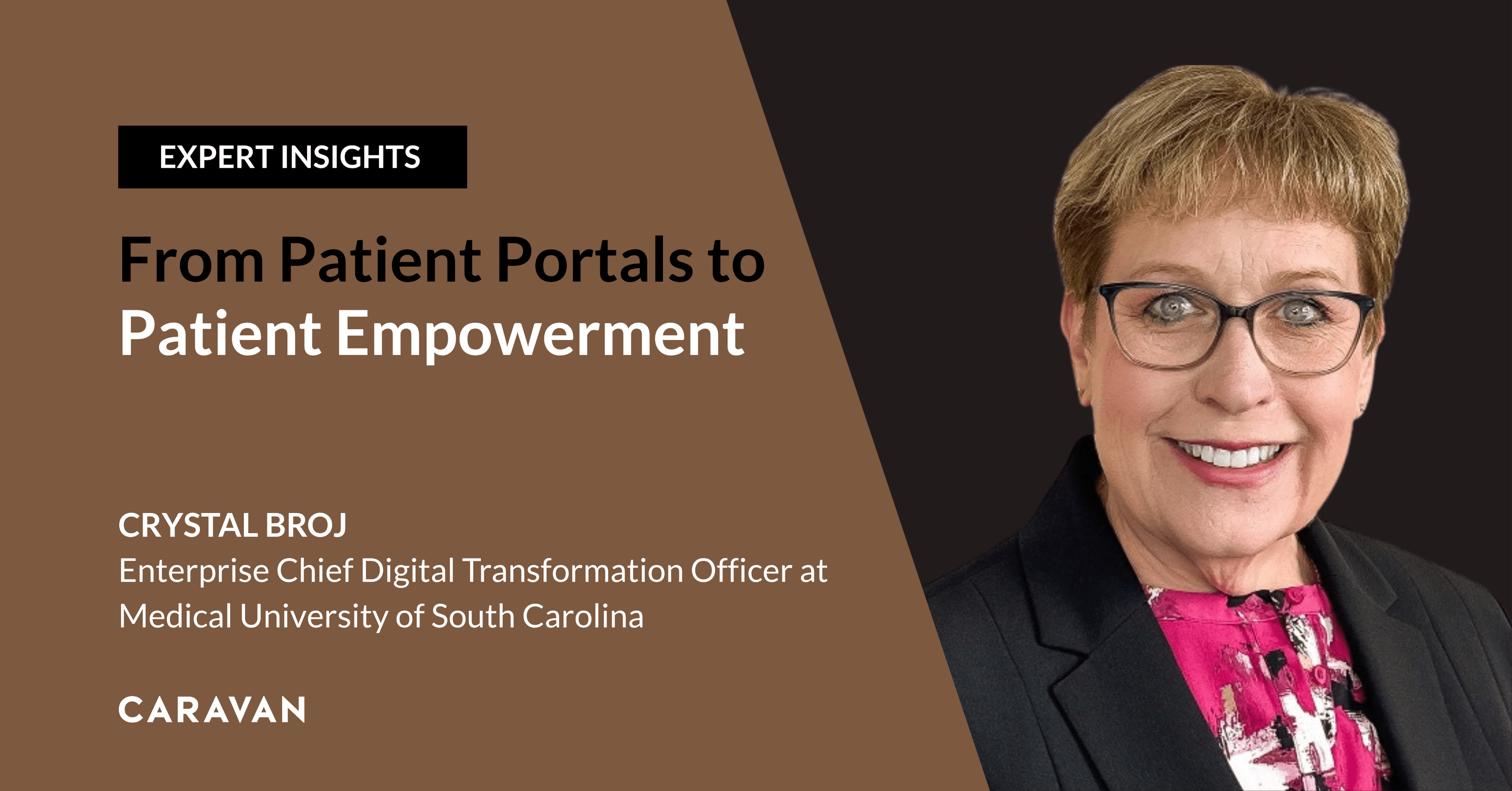
In this interview, Crystal Broj, Chief Digital Transformation Officer at the Medical University of South Carolina (MUSC), shares her perspective on the role of patient education in the digital patient experience. She explores how health systems can use trusted content, personalization, AI, and accessible digital tools to better support patients throughout their care journey.
1. Digital transformation is often focused on technology and infrastructure, but ultimately the goal is improving the patient experience. Where does patient education fit into a successful digital transformation strategy?
Patients aren’t comparing their healthcare digital experience just to other health systems anymore. They’re comparing it to every other digital experience in their lives, their airline, their bank, online shopping, and all the other platforms they use every day. Those companies don’t give you a tutorial on how to use their digital tools. They work to make the experience so easy and intuitive that you don’t need one. I think healthcare needs to hold itself to that same standard. If we have to spend a lot of time teaching patients how to use our technology, we should probably first ask whether we’ve made the technology easy enough to use. To me, that’s where patient education becomes really important. We shouldn’t be educating patients on how to navigate our technology. We should be using technology to help patients better understand their health and their care. Can we help someone understand what is happening, what they need to do next, how to prepare, and where to go when they have questions? That’s the real opportunity. The technology should almost disappear into the experience. The education should be focused on empowering the patient.
2. Health systems are investing in patient portals, apps, and other digital tools. What makes patients actually want to use these platforms and continue coming back?
Patients come back when something is useful. We can measure downloads, registrations, portal activations and all kinds of digital adoption metrics, but that doesn’t necessarily mean we’ve created something patients value. Patients want digital experiences that make healthcare easier. Can I find the right provider? Can I schedule without making a phone call? Can I understand how to prepare for my appointment? Can I get an answer when the office is closed? Can I easily figure out what happens next? At MUSC, we think a lot about meeting patients where they are rather than forcing everyone into one channel. Sometimes that’s the website. Sometimes it’s MyChart, a text message, or a phone conversation. I don’t think the goal should be to get every patient into one digital tool. The goal should be to create a connected experience across all of those tools so patients can interact with us in the way that works best for them.
3. How can educational content make digital health tools more valuable by giving patients a reason to engage beyond scheduling appointments or accessing medical records?
Scheduling an appointment or looking at a test result is transactional. It’s something you do because you need to do it. Education gives us an opportunity to make these digital experiences useful between those transactions. Think about someone who has just received a diagnosis. They may have questions about what it means, treatment options, what they should be doing at home, what symptoms they should watch for, or what they should ask their doctor at the next visit. Those questions don’t necessarily happen between 8 and 5, and they certainly don’t all happen while the patient is sitting in the exam room. I think the opportunity is to move away from simply giving patients a giant library of health information and start delivering education that’s relevant to where they are in their care journey. Instead of saying, “Here are thousands of articles you can search,” imagine being able to say, “Based on where you are right now, here are the three things that may be most helpful to you.” That’s where personalization and eventually AI can be powerful. Education becomes much more valuable when it’s timely, relevant, and connected to what the patient needs to do next.
4. Patients increasingly expect healthcare information to be available when and where they need it. How can health systems extend patient education beyond the clinical visit and throughout the patient journey?
The actual clinical visit is such a small part of the time a person spends managing their health. Yet historically, we’ve tried to squeeze an enormous amount of information into that visit, and it’s often happening at exactly the moment when a patient may be anxious, overwhelmed, or trying to remember ten other things their doctor just told them. Technology gives us the ability to spread that education across the entire journey. We can help patients prepare before the visit. We can reinforce information afterward. We can reach out between visits with reminders, care-gap outreach, text messaging, conversational AI, portal messages, or other digital channels. We’ve seen the value of proactive outreach at MUSC in areas like preventive care and cancer screening. Instead of waiting for someone to figure out what they need, we can reach out, explain why something is important, and then make the next step, like scheduling an appointment. I don’t think the future is about giving patients more information. We already have plenty of information. It’s about getting the right information to the patient at the right time and making the next action easy.
5. MUSC serves a diverse patient population. How important are multilingual and accessible educational resources when it comes to creating an equitable digital patient experience?
They’re essential. A digital experience isn’t really successful if it works beautifully for someone who speaks English, has high health literacy, is comfortable with technology, has reliable internet access and doesn’t have any accessibility needs, but is difficult for everyone else. We have to think about those things from the beginning: language, reading level, accessibility, mobile design, digital literacy and even connectivity. Digital can be a tremendous equalizer because it allows us to reach people in new ways. But it can also unintentionally make disparities worse if we don’t design for the entire population we’re serving. For me, the test is pretty straightforward: Can the patient access it? Can they understand it? And can they act on it?
6. Health systems have enormous amounts of clinical expertise, but creating and maintaining high quality educational content requires significant time and resources. How should organizations approach building a scalable patient education strategy?
In my experience, health systems do not necessarily need to create all patient education content themselves. Clinical experts bring tremendous value, but their time is limited, and having every department independently develop, review, update, translate and maintain large volumes of educational materials can be challenging to sustain over time. One approach organizations may consider is developing an enterprise content strategy that helps determine which materials are best created internally, which can come from trusted external sources, who is responsible for reviewing content and how information is kept current. It can also help reduce duplication and promote consistency across the organization. Another consideration is how educational content is delivered. Whether content is created internally or curated from external sources, there may be opportunities to make it available across multiple channels, such as websites, patient portals, mobile applications, discharge materials and other digital touchpoints. AI also has the potential to support these efforts by helping organize, personalize, summarize and translate information. At the same time, many healthcare leaders would agree that strong governance remains important. Regardless of the tools being used, organizations have a responsibility to ensure patient education materials are accurate, appropriate and trustworthy.
7. What role do you see trusted, evidence based content playing in improving engagement with digital health platforms, and ultimately helping patients become more active participants in their care?
I actually think trust may be one of the biggest advantages health systems have in the digital world. Patients don’t have a shortage of health information anymore. They can search Google, ask a generative AI tool, watch a TikTok video, read a Facebook post, or find thousands of websites offering an answer in seconds. The challenge is figuring out which answer to trust, and that’s a huge opportunity for health systems. We can be a trusted digital source for patients because the information we provide is evidence based and backed by the clinicians who are caring for them. Being accurate isn’t enough. The information also has to be understandable and useful. Good patient education should help someone answer three basic questions: What does this mean for me? What should I do next? When should I ask for help? If we can combine trusted information with an easy digital experience and a clear next step, we’re doing much more than giving patients access to their medical records. We’re giving them the tools and confidence to be more active participants in their own care. Ultimately, that’s what digital transformation should be about. Technology shouldn’t make healthcare feel more technological. It should make healthcare easier to understand, easier to navigate, and easier to act on.
Successful digital transformation is not defined by how much technology a health system introduces, but by how effectively that technology serves patients. When education is timely, relevant, accessible, and connected to a clear next step, digital tools can help make healthcare easier to understand and navigate.
About Crystal Broj
Crystal Broj is Chief Digital Transformation Officer at the Medical University of South Carolina (MUSC). She leads enterprise transformation focused on improving patient access and reducing complexity within receiving medical information and care. Her work focuses on translating innovation into scalable solutions across patient access, clinical operations, AI-enabled engagement, and automation. She is also a national speaker on AI-enabled healthcare transformation.
About CARAVAN
CARAVAN Wellness is the #1 global leader in expert content solutions for health, wellness, workplace, financial care, and education. CARAVAN impacts millions of people by helping healthcare organizations, health plans, employers, and digital platforms educate, engage, and empower people with trusted expert content. At CARAVAN, we envision a world where everyone can access trusted education and resources, regardless of their age, income, or location. Learn more at caravanwellness.com