When Patient Education Becomes Patient Action
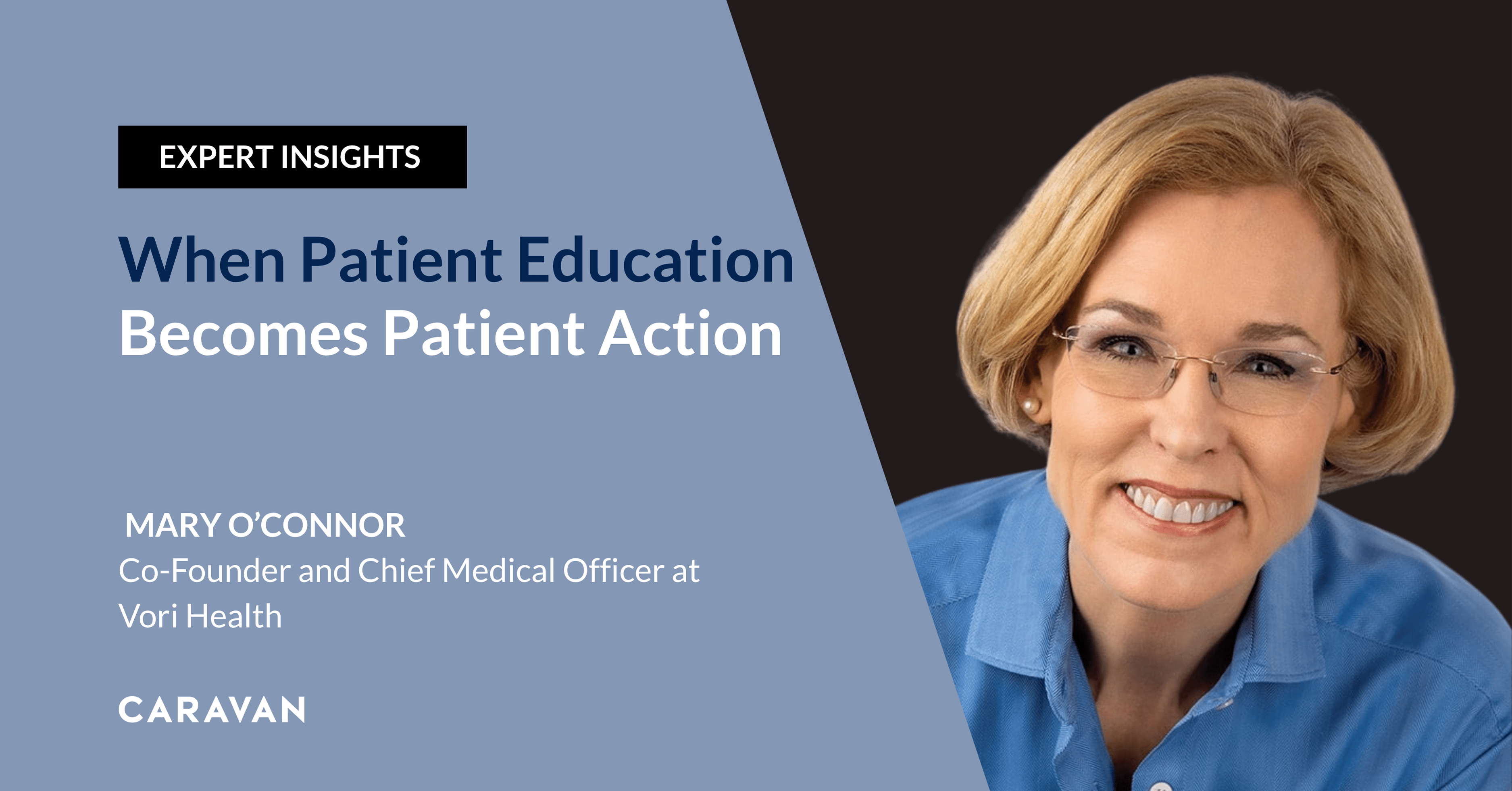
In one study, 77% of physicians believed their patients understood their diagnosis, while only 57% of patients could correctly identify it. This gap highlights an important challenge in patient education: providing information does not always mean that information is understood or can be put into action. In this interview, Mary I. O’Connor, MD, co-founder and Chief Medical Officer of Vori Health, shares her perspective on what makes patient education more effective. She discusses how personalized, accessible education can help patients better understand their care, make meaningful behavior changes, and take a more active role in their health.
1. At Vori Health, you’ve taken a multidisciplinary approach to helping patients manage musculoskeletal conditions. How important is patient education in helping people understand their condition and take an active role in their recovery?
Patient education is fundamental to positive clinical outcomes. It the foundational to patient engagement. Patients need to understand their condition, how it is treated, and what they need to do. The more personalized the education, the better! Does the patient prefer video, interactive modules, static documents? How can their level of understanding be assessed? Patient education is often underappreciated as a critical component to drive effective care.
2. Patients can leave a clinical visit with a lot of information but still struggle to know what to do when they get home. How can healthcare organizations better bridge that gap between clinical guidance and everyday action?
The information the physician gives the patient can be quite overwhelming. Patients can get “stuck” on the diagnosis and not actually hearing a lot of the subsequent discourse. For example, when a patient is given a diagnosis of arthritis, they may immediately consider “worse case scenarios” and if they will become debilitated or need surgery. These concerns are often not directly expressed to the physician at that moment in time. The physician has proceeded to discuss the treatment plan, but the patient’s mind is still on the worse case scenario! This gap in patient understanding is real and significant. Providing the patient with a personalized care plan helps bridge this by providing the specific information the patient needs to engage in their treatment. This care plan is an easy-to-follow guide of what the patient needs to do every day combined with corresponding education content. The care plan is actually part of the patient’s education plan.
3. What makes patient education effective enough to actually change behavior rather than simply give someone more information to read?
Education regarding medical conditions alone does not typically change behavior. Most people know that being overweight and not exercising are bad for their health. The key is incorporating the elements of effective behavior change into that education. For example, movement is critical to your health and here are the easy steps you can take to improve your level of physical activity. When possible, connect this change to what matters to the patient, like the ability to run a 5K or play with their children. Suggest an “accountability buddy” to help the patient stay on track. Finally, personalized the potential future outcome for the patient to them: if you lose 5 lbs. you will decrease the stress on your knees by 30-60 pounds.” The more the education can be tailored to the individual and include small behavior changes which can be built upon, the more likely to be effective.
4. For conditions that require ongoing lifestyle changes, how can educational content help keep patients motivated and engaged between appointments?
Lifestyle change is hard; I think we all appreciate that. We know from the science of behavioral change those small, tangible goals that an individual can build on to produce results. Creating the educational content that takes the patient on that journey, of small and achievable changes, is likely to be more effective!
5. Patients have different levels of health literacy, learning preferences, and language needs. How important is it to provide education in different formats and languages to make care more accessible?
Language is an easy barrier for everyone to understand. It is straightforward that educational content needs to be in the language that the patient can understand. Learning preferences can be addressed by the format of the content: video, interactive, or just text. But incorporating cultural relevance is the next level to consider, e.g., education on nutrition tailored to the types of foods that the individual prefers. The more the education can be personalized, the more likely it will be effective.
6. Digital care allows organizations to reach patients much more frequently than traditional appointments. What role should ongoing educational content play in creating a stronger relationship between patients and their care team?
Digital delivery allows for interaction with patients on even a daily basis, a frequency not achievable in the in-person setting. A digital education program providing small daily dose of education paired with nudges for desired activity can foster a stronger relationship between the patient and their care team. It is a very exciting time to use digital tools to improve health literacy!
7. From your experience, what are the biggest gaps you see in the patient education experience today, and where could healthcare organizations do more?
The biggest gap I see is in delivering educational content is that many programs do not include a process for verification that the patient understands the content. Years ago (2012) I published a research paper looking at whether there were differences in the frequency and types of questions asked by men versus women schedule for hip or knee replacement in an online education program. We found that women asked significantly more questions overall and particularly greater questions related to “Your Condition,” “Your Procedure,” and “Risk and Benefits.” This underscores that different patients (individuals and groups) have different levels of educational need—some ask more questions than others because they need more information to feel comfortable with the treatment. Having an online education program which can assess the patient’s understanding of the content is key to better patient education.
8. If you were designing the ideal patient education experience from the ground up, what would it look like, and what role would trusted, evidence based content play in keeping patients engaged throughout their health journey?
The ideal patient education experience would incorporate the patient’s goals and values as well as their preferences for how to learn. It would be visible to the patient’s care team and support patient engagement with the treatment plan. Mechanisms to assess if the patient understood the education would alert clinicians when the patient had additional questions or struggled with the content. Evidence-based content would be personalized to the patient based on the whole person, not just one medical condition, and their cultural background. AI would recognize the emotional state of the patient and adjust content and engagement as appropriate. Patient- centered outcomes would be measured such as clinical improvement and patient confidence in their treatment plan. The program would present patients with a personalized predictive picture of a future health state based on adherence to treatment versus non-adherence. Patients would recognize their role as the primary driver of their own health and wellbeing. Clinical outcomes would improve, health disparities would lessen, and inappropriate utilization of healthcare resources would decrease. That is the power of the future of patient education.
Effective patient education goes beyond simply giving patients more information. It means helping people understand what that information means for them and giving them practical ways to use it in their daily lives. As digital care continues to create new opportunities to reach patients outside of traditional appointments, education can become more personalized, accessible, and responsive to individual needs.
About Mary O’Connor
Mary I. O’Connor, MD, is co-founder and Chief Medical Officer of Vori Health, a nationwide telemedicine musculoskeletal company focused on transforming the delivery of patient-centered, value-driven care. She is Professor Emerita of Orthopedics at Mayo Clinic and previously served as Professor of Orthopaedics and Rehabilitation at Yale School of Medicine, where she became the inaugural Director of the Center for Musculoskeletal Care. A nationally recognized leader in advancing diversity in orthopedic surgery, Dr. O’Connor also serves as Chair of the Board of Directors of Movement is Life, a nonprofit coalition addressing musculoskeletal health disparities. She has held numerous leadership positions across orthopedic organizations and has received several honors, including the AAOS Diversity Award, AAHKS Diversity Award, and Mayo Clinic Distinguished Clinician Award. She is also co-author of Taking Care of You: The Empowered Woman’s Guide to Better Health. A former U.S. Olympic rower and recipient of the Congressional Gold Medal as a 1980 Olympian, Dr. O’Connor is passionate about promoting the power of sports for girls and women.
About CARAVAN
CARAVAN Wellness is the #1 global leader in expert content solutions for health, wellness, workplace, financial care, and education. CARAVAN impacts millions of people by helping healthcare organizations, health plans, employers, and digital platforms educate, engage, and empower people with trusted expert content. At CARAVAN, we envision a world where everyone can access trusted education and resources, regardless of their age, income, or location. Learn more at caravanwellness.com