The Role of Communication in Patient Trust
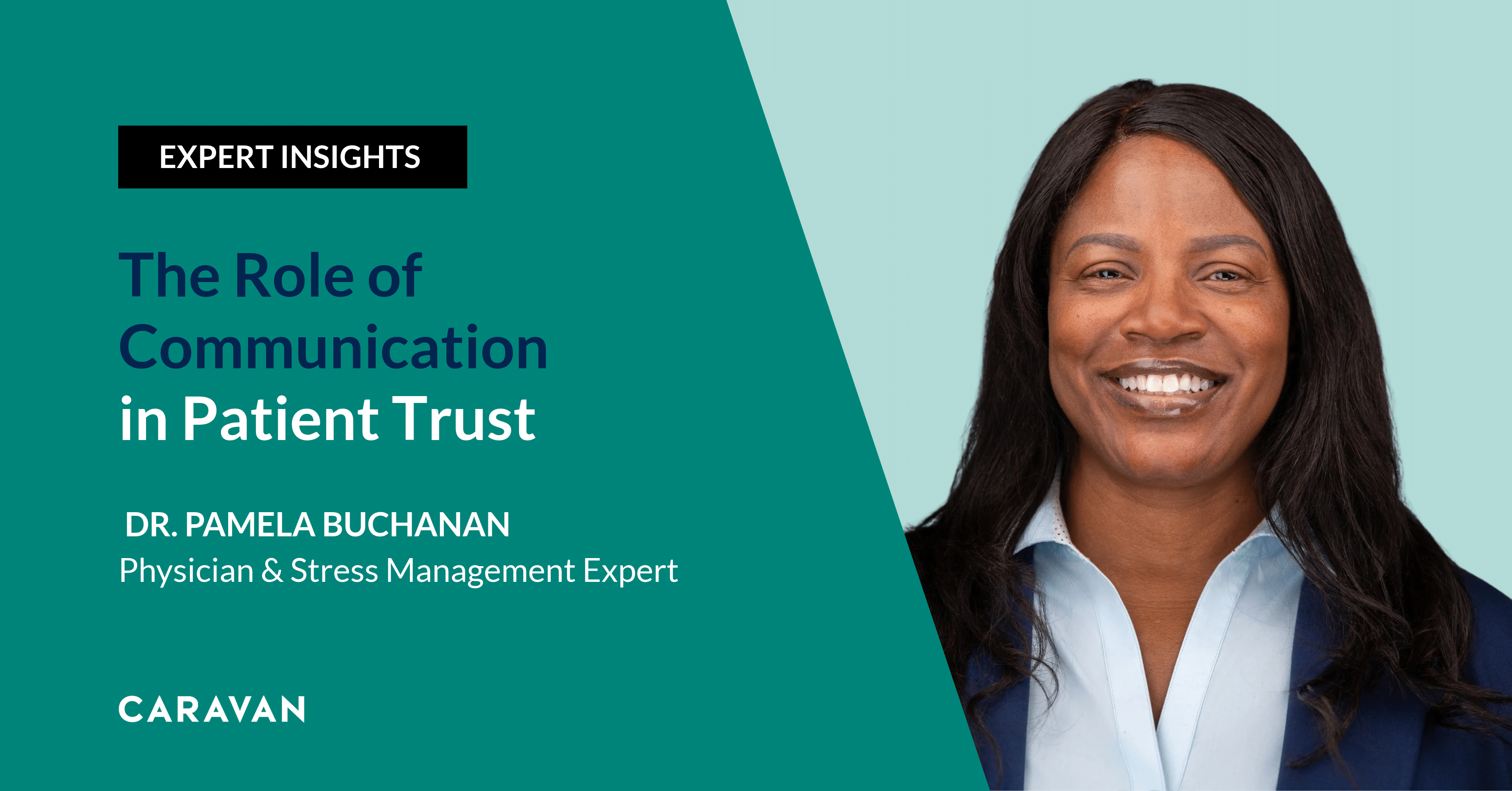
In a 2024 study, only 53% of Americans rated medical doctors highly for honesty and ethics. As healthcare continues to evolve, building patient trust requires more than providing information. It also requires clear communication, cultural understanding, and compassion between patients and healthcare professionals.
In this interview, Dr. Pamela Buchanan, a board-certified physician and nationally recognized stress management expert, shares her perspective on improving patient trust and education. Drawing on 20 years of clinical experience, she explores how healthcare organizations can address health literacy, deliver culturally relevant information, and use technology to strengthen patient relationships.
1. Where do you see the biggest disconnect between the information healthcare professionals provide and what patients actually understand and need to make informed decisions about their health?
The biggest disconnect is this: we deliver information, but patients need understanding. Those are not the same thing.
In the emergency department, I’ve watched the pattern for more than 20 years. A patient gets discharged after a long, frightening night with a stack of instructions written in medical language. They nod. They sign. They go home. But nodding is not understanding. Only about 12% of U.S. adults have proficient health literacy, which means most of the people we send home are trying to decode instructions that were never written for them.
We speak in diagnoses. Patients live in decisions.
“Can I afford this prescription?”
“Can I miss another day of work?”
“Who is going to watch my kids while I rest”
If our education doesn’t answer the questions patients are actually asking, it isn’t education. It’s paperwork. The fix is not more information. It’s better communication: plain language, teach-back, and asking one simple question before every discharge: “What matters most to you about getting better?” When we start there, the information finally has somewhere to land.
2. How can healthcare organizations use accessible, culturally relevant patient education to help close gaps in health literacy and trust?
Trust is the prerequisite. You cannot educate someone who doesn’t believe you have their best interests at heart. For many Black patients, mistrust of the healthcare system is not irrational. It was earned through history, and it is reinforced every time a patient feels dismissed, rushed, or unheard. That’s why I created Melanated Medicine™, a community focused on Black health education and Black medical history. When people understand their history and their bodies, they walk into the exam room with more power.
Culturally relevant education means meeting people where they are: in their language, with examples that reflect their lives, and through messengers they already trust. Community health workers. Faith leaders. Clinicians who look like the communities they serve. Representation is not a nice-to-have. It is a clinical tool.
My challenge to healthcare organizations is simple: co-create your materials with the communities you serve, test them before you publish them, and measure comprehension, not distribution. Handing out 10,000 brochures means nothing if no one understood them.
3. What do you believe healthcare organizations should be doing differently to ensure patients receive trustworthy, understandable, and actionable health information?
Misinformation fills a vacuum. If healthcare organizations aren’t showing up where patients are, someone else will, and they won’t be held to our standards. Patients aren’t turning to social media because they don’t care about the truth. They go there because it’s accessible, relatable, and fast. Our job is to be all three, without sacrificing accuracy. That means putting trusted clinicians in front of the public, not just logos and press releases. I grew my LinkedIn community from 1,000 to nearly 50,000 followers organically, and the lesson is clear: people will engage with credible health information when it’s delivered by a real human, in a real voice, with a clear point.
Healthcare organizations should do three things differently. First, equip and reward clinicians who create public education content. Second, end every message with one clear, actionable next step. Third, stop publishing information patients have to work to understand. If it isn’t understandable, it isn’t trustworthy. And if it isn’t actionable, it isn’t helpful.
4. Where do you see the greatest opportunities for digital health tools and AI to improve patient education and engagement without losing the human connection that is so important to building trust?
I’ve practiced telemedicine since 2015, and I’m licensed in 51 U.S. states and jurisdictions. Technology has allowed me to reach patients who would never have made it to my emergency department or office. I’ve seen firsthand that digital health, done right, expands access. As North American Deputy CMO at Embla, I’m focused on exactly that question.
The greatest opportunity for AI is to take on the repetitive work so clinicians can return to the human work. AI can translate lab results into plain language, deliver education in a patient’s preferred language, send reminders, and answer the same question at 2 a.m. that a patient was too embarrassed to ask in the exam room. But here is my line in the sand: technology should extend the relationship, not replace it. Human connection is not an inefficiency to be optimized away. It is part of the treatment.
We also have to be honest about bias. AI learns from data, and our data reflects the inequities in our system. Every organization deploying AI in patient care must audit it for who it serves well and who it leaves behind. Innovation without equity just digitizes the disparities we already have.
5. Looking ahead, how can healthcare organizations move beyond traditional patient education to better support patients’ overall wellbeing and empower them to take a more active role in their health?
Health doesn’t happen in the hospital. It happens at home, at work, and in the neighborhood. Most of what determines a patient’s outcome happens long after they leave our care.
As Medical Director of Occupational Health at General Motors, I led a clinical team serving a facility of roughly 5,000 employees, and I learned that the workplace can be one of the most powerful health platforms we have. That’s why I’m passionate about making quality healthcare a real benefit for workers who are not well-resourced through their employers.
Moving beyond traditional education means screening for social needs like food, housing, transportation, and cost, then actually connecting patients to resources. It means shared decision-making instead of instructions. And it means addressing the factor that drives so many chronic conditions: stress.
Here’s what I teach: stress is not the enemy. Stress is a signal. Our relationship to stress is the problem. When we teach patients to read that signal and respond to it with intention, we move them from passive recipients of care to active leaders of their own health. That’s not just patient education. That’s patient empowerment.
Patients often face difficult health decisions while managing stress, fear, and uncertainty. Building trust starts with listening to their concerns and communicating in ways they understand and that makes them feel safe and heard. Healthcare organizations can strengthen these relationships through accessible education and culturally relevant support.
About Pamela Buchanan
Dr. Pamela Buchanan, MD is a board-certified physician with 20 years of experience, a TEDxspeaker, and a nationally recognized stress management expert. Known as “Dr. B Strong,” she helps high-achieving women and physicians transform stress into strategy, burnout into boundaries, and purpose into profit. Through her signature brand, Strong Medicine™, she delivers powerful keynotes, coaching, and courses that teach people how to stay well—so they don’t have to get well.
About CARAVAN
CARAVAN Wellness is the #1 global leader in expert content solutions for health, wellness, workplace, financial care, and education. CARAVAN impacts millions of people by helping healthcare organizations, health plans, employers, and digital platforms educate, engage, and empower people with trusted expert content. At CARAVAN, we envision a world where everyone can access trusted education and resources, regardless of their age, income, or location. Learn more at caravanwellness.com