Using AI to Make Oncology More Personal
63% of oncologists said speaking with and advising patients about their diagnosis and treatment was one of the most rewarding parts of their work, while 50% identified electronic health records as a major workplace stressor. As AI becomes more integrated into healthcare, there is an opportunity to make technology work better for clinicians, helping them manage complex information while keeping their focus on supporting patients.
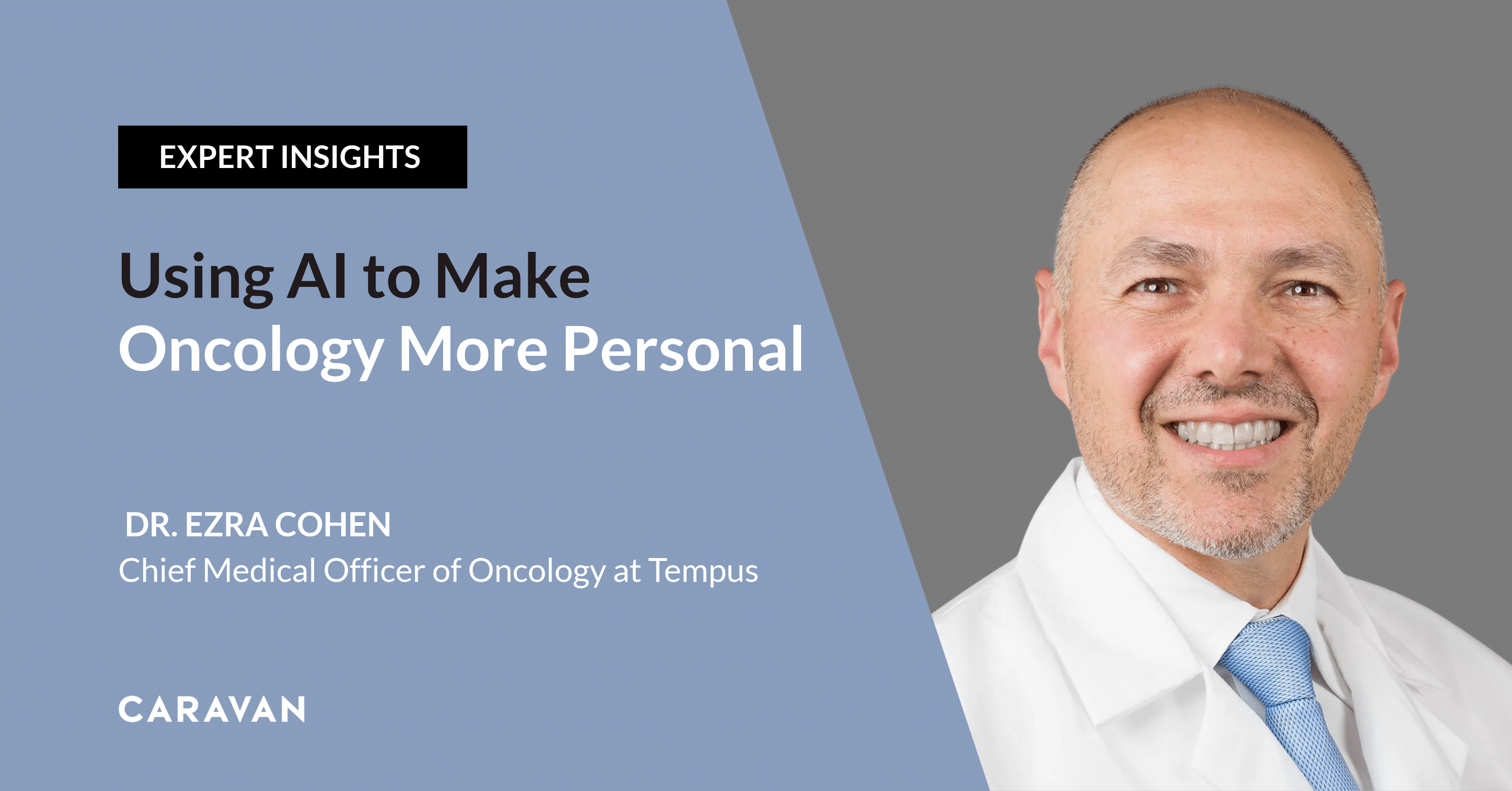
In this interview, Dr. Ezra Cohen, Chief Medical Officer of Oncology at Tempus, shares his perspective on how AI can help clinicians navigate increasingly complex oncology data, identify potential gaps in care, and support the individual needs of each patient.
1. As AI and precision medicine make oncology increasingly data driven, how do we make sure patients can actually understand and act on the information that technology is generating?
One of the most promising applications of AI is its ability to make complex medical information more accessible and understandable. Patients can ask questions and receive clear, personalized explanations grounded in clinical guidelines and their individual medical history. We aim to help providers, patients, and caregivers better understand complex information so they can have more informed conversations and make decisions about care together.
2. Tempus is bringing together genomic, clinical, and longitudinal patient data to create more personalized insights. What does that mean for the way we educate patients, especially when the “right” information may be different for every patient?
Every patient is unique, which creates uncertainty when we try to apply findings from large population studies to an individual. However, with sufficiently large, high-quality datasets and the ability of AI to analyze them, we can begin to generate more personalized insights that help reduce that uncertainty.
For instance, we developed our first oncology foundation model to identify factors that may help predict which patients with EGFR-mutated lung cancer are most likely to benefit from a commonly used targeted therapy. Insights like these could help physicians and researchers better distinguish between patients who are likely to benefit from a treatment and those who may not.
Ultimately, this has important implications for patient education. Rather than providing every patient with the same general information, we have the potential to help patients better understand what the available evidence means for their individual circumstances, allowing for more informed conversations with their care teams.
3. We often talk about AI helping clinicians close gaps in care. Where do you see technology playing a role in closing the information and education gaps patients experience between appointments?
The reality is that so much information is being generated about optimal patient management that it is impossible for physicians to stay up to date in every circumstance. This is where AI can play an important role.
For example, our Tempus NEXT platform integrates with electronic medical records to identify potential gaps in patient care based on established clinical guidelines. It can notify a member of the care team when a patient may benefit from an additional test, treatment, or other intervention that hasn’t yet been considered.
Importantly, AI doesn’t make the decision. It surfaces relevant evidence so the physician can determine the appropriate next step. This takes some of the burden off physicians so they can concentrate on what they do best: helping patients understand their options and make informed decisions about their care.
4. Looking ahead, what should the ideal technology enabled patient experience look like, from diagnosis through treatment and ongoing monitoring, and where do you think we still have the biggest opportunity to improve it?
This is something we think about a lot at Tempus. I believe that in the near future, AI will be fully integrated into the patient experience, making it better for everyone involved.
On the patient side, we will have applications that can bring together medical records in any format, allowing patients to ask specific questions about their medical history, better understand their condition and prepare for appointments with the information most relevant to their care. This represents a major shift in the power of information from health systems to patients, and I believe it will be transformational.
For providers, AI will make it possible to quickly summarize complex clinical histories, analyze relevant research and identify potential next steps, allowing physicians to be better prepared for every patient encounter. It will also help physicians more accurately predict which treatments are likely to work, recognize when a therapy is not working and identify the most appropriate next treatment option for an individual patient.
Beyond individual encounters, AI integrated into electronic health records will help improve quality of care, reduce errors, and increase efficiency across the healthcare system. Ultimately, the goal is to give patients greater access to information and physicians better tools to make informed decisions, resulting in more personalized, effective care.
By helping clinicians organize information and recognize potential gaps, AI tools can create more opportunities for informed conversations and personalized decision-making in oncology care.
Technology should not replace the expertise or human connection at the center of cancer care. Instead, it can give care teams better tools to navigate growing amounts of information and help patients better understand their options throughout the care journey.
About Ezra Cohen
Ezra Cohen, MD joined Tempus AI in May 2023 as the CMO, Oncology. Dr. Cohen is a leading medical oncologist and cancer researcher. Prior to Tempus he was the Chief of the Division of Hematology-Oncology as well as the Associate Director of Clinical Science at UCSD Moores Cancer Center. Dr. Cohen obtained his medical degree from University of Toronto in 1990 and trained in internal medicine at Albert Einstein College of Medicine. Subsequently, he completed a hematology/oncology fellowship at the University of Chicago and joined the faculty there in 2002. He joined the faculty at UCSD in 2014 as full professor.
About CARAVAN
CARAVAN Wellness is the #1 global leader in expert content solutions for health, wellness, workplace, financial care, and education. CARAVAN impacts millions of people by helping healthcare organizations, health plans, employers, and digital platforms educate, engage, and empower people with trusted expert content. At CARAVAN, we envision a world where everyone can access trusted education and resources, regardless of their age, income, or location. Learn more at caravanwellness.com