Bringing Human Connection Back to Healthcare With AI
In a recent study, 47% of patients reported that their doctor spent less time looking at a computer after adopting AI scribes. As healthcare organizations integrate AI, these tools can help reduce administrative work and allow physicians to focus more on their patients.
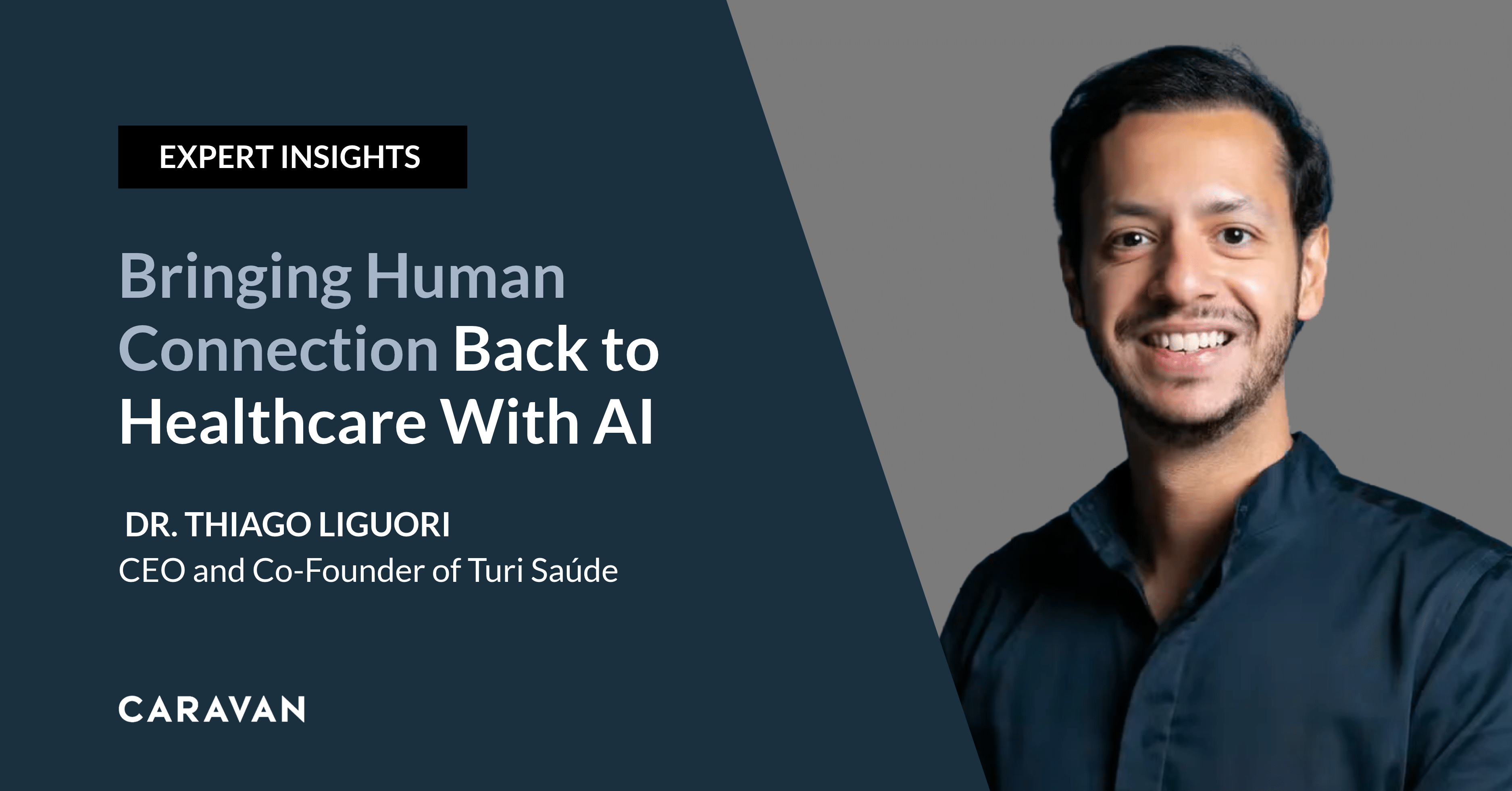
In this interview, Thiago Liguori, CEO and co-founder of Turi Saúde, shares his perspective on how AI can improve the patient experience. He explores how healthcare organizations can use technology to support physicians, improve patient education, and strengthen communication throughout the care journey.
1. Where is the biggest disconnect between healthcare technology and the patient experience?
The biggest disconnect is that most healthcare technology was built around transactions, not around the clinical encounter. Over the last two decades we digitized billing, scheduling and records, and we measured success in throughput. The patient experienced the result as more screens between them and their doctor.
As a cardiologist, I saw this firsthand. Electronic health records turned physicians into data-entry clerks, and patients spent consultations looking at the back of a monitor. The technology worked for the institution. It rarely worked for the person in the chair.
The fix starts with a different question. Instead of asking “how many patients can we see?”, we should ask “what does the patient understand and feel when they walk out of the room?” Technology that cannot answer that question is solving the wrong problem.
2. As AI gives clinicians more time, how can organizations use it to improve patient communication, education and engagement?
Time returned to a clinician is not automatically time given back to the patient. If organizations are not intentional, that time simply becomes more appointments per day. At Turi Saúde we see a different path. When an ambient AI scribe captures the consultation, the same conversation can produce two documents: a clinical note for the chart and a plain-language summary for the patient, with the diagnosis, the plan, and what to watch for at home. The physician reviews both before anything leaves the room. Organizations should also meet patients where they already are. In Brazil, that means WhatsApp, not a portal nobody logs into. Follow-up messages, exam explanations and medication reminders delivered through familiar channels do more for engagement than any new app. My advice is we should protect part of the time AI frees up, and spend it on conversation, not on volume.
3. How can organizations ensure AI also helps patients understand their conditions, options and next steps?
Most clinical AI is written for clinicians. It summarizes exams, flags risks and suggests diagnoses in technical language. That is useful, but it stops halfway. Organizations need a translation layer, with tools that turn clinical reasoning into explanations adapted to each patient’s health literacy, language and context. A good explanation answers four questions: i. What do I have? ii. Why does it matter? iii. What are my options? and iv. What happens next?
Two safeguards matter. First, the physician stays in the loop and validates what the patient receives. Second, we should check understanding, not just deliver information. Asking patients to explain the plan back in their own words is an old technique, and AI can make it easier to apply at scale.
4. How can organizations build trust and clearly communicate the role of AI?
Trust is built with plain words and clear accountability. Patients should know when AI is being used, what it does, and what it does not do. If a consultation is recorded by an ambient scribe, the patient should be told in simple terms, asked for consent, and given the option to decline. They should also know where their data goes and who has access to it.
Accountability must remain human. AI can draft, summarize and suggest, but the physician signs the note and owns the decision. Saying that explicitly reassures patients more than any technical explanation.
Finally, we need to resist the hype. Overpromising what AI can do erodes trust faster than any error. Regulators are moving in this direction too; Brazil’s Federal Council of Medicine has recently set rules for AI use in medical practice, reinforcing physician responsibility and transparency with patients.
5. How will AI transform the relationship between professionals and patients?
I believe AI will give medicine back something it lost for decades, attention! When documentation, forms and exam summaries are handled in the background, the physician can return to listening, examining and explaining. The relationship will also become more continuous. Today, care happens in short visits separated by long silences. With AI, the time between visits can be filled with personalized education, monitoring and timely nudges.
A heart failure patient, for example, can receive guidance tailored to their own medications, exams and daily routine, not a generic pamphlet. The risk is using AI to replace human contact instead of protecting it. The organizations that win will use technology to make care feel more personal, not more automated.
AI can help physicians spend less time on administrative tasks and more time with patients. It can also make medical information easier to understand and support communication between visits. However, improving efficiency alone does not guarantee a better patient experience. Healthcare organizations must use these tools to strengthen communication and support patient education. By keeping human connection at the center, AI can help both patients and providers feel more supported and connected.
About Thiago Liguori
Thiago Liguori is the CEO and co-founder of Turi Saúde, a Brazilian healthtech building AI-powered clinical documentation tools that reduce administrative burden for physicians. A clinical cardiologist by training, he holds a PhD in cardio-oncology from the University of São Paulo (USP) and trained at Hospital Sírio-Libanês. He was previously CMO and part of the founding team at Pipo Saúde, and completed the Stanford GSB Ignite program.
About CARAVAN
CARAVAN Wellness is the #1 global leader in expert content solutions for health, wellness, workplace, financial care, and education. CARAVAN impacts millions of people by helping healthcare organizations, health plans, employers, and digital platforms educate, engage, and empower people with trusted expert content. At CARAVAN, we envision a world where everyone can access trusted education and resources, regardless of their age, income, or location. Learn more at caravanwellness.com


